
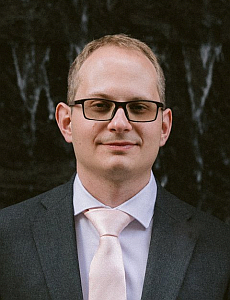
Denis Vida, Adjunct Research Professor
Research Areas
Meteor Physics and Planetary Defence; Space Situational Awareness; Climate Change MitigationResearch Interests
Objectives:
I use networks of low-cost cameras, and the software that turns their video into physical measurements, to study what moves through and above Earth's atmosphere. My core expertise is the origin and evolution of the small bodies of the Solar System: meteoroids, asteroids and comets. In recent years I have extended the same instruments and methods to tracking satellites in low Earth orbit and to observing aircraft contrails. I founded and lead the Global Meteor Network, an open-source network of more than 1,600 cameras in 45 countries run by volunteers, and I lead the Western Contrail Research Project.
The three themes in my program and their objectives are:
Meteor physics and planetary defence: Measure the orbits and physical properties (density, strength, structure) of meteoroids by combining high-precision observations with numerical models of ablation and fragmentation, Bayesian inference and machine learning. Measure the flux of small bodies reaching Earth, characterize and predict meteor showers, study metre-sized asteroids detected before impact, and guide meteorite recoveries.
Space situational awareness: Develop low-cost, wide-field optical systems that track satellites and space debris down to decimetre sizes without prior knowledge of where to look (Project Luciole, in close collaboration with Defence Research and Development Canada), measure the brightness of satellite megaconstellations and their impact on astronomy, and observe satellite re-entries with the Global Meteor Network.
Climate change mitigation: Observe aircraft contrails from the ground, day and night, and match each one to the flight that produced it, to test atmospheric models and make operational contrail avoidance possible (Western Contrail Research Project, in close collaboration with Luc Busquin (ContrailCast); part of the Horizon Europe E-CONTRAIL 2 consortium). Use meteors as probes of the cooling upper atmosphere.
Publications
- Nature Astronomy
https://doi.org/10.1038/s41550-022-01844-3 - Nature Astronomy
https://doi.org/10.1038/s41550-025-02659-8 - Monthly Notices of the Royal Astronomical Society
https://doi.org/10.1093/mnras/stab2008 - Monthly Notices of the Royal Astronomical Society
https://doi.org/10.1093/mnras/stac1766 - Astronomy & Astrophysics
https://doi.org/10.1051/0004-6361/202449359
[Complete Publications Listing (Google Scholar)] https://scholar.google.ca/citations?user=IO5jCNQAAAAJ
[Complete Publications Listing (SciX / NASA ADS)] https://scixplorer.org/search?q=author%3A%22Vida%2C%20D%22
Teaching
Graduate:
Astronomy 9505: Scientific Programming in Python
Astronomy 9506: Data Mining and Machine Learning in Astronomy
Awards
- London Inc. Top 20 Under 40 (2026)
- Top 10% most-read article in Meteoritics & Planetary Science (2023)
- Named in the Royal Astronomical Society Group Achievement Award in Geophysics to the UK Fireball Alliance (2022)
- Asteroid (30304) Denisvida named by the International Astronomical Union (2021)
- First Prize, Fallona Family Interdisciplinary Research Showcase, Western (2018)
- Western Graduate Research Scholarship (2016-2018)
- Dean's Award, Faculty of Electrical Engineering, University of Osijek (2016)
- President's Award, J. J. Strossmayer University of Osijek (2015)
Professional Activities
Research leadership:
Founder and Principal Investigator, Global Meteor Network, 2018-present
Principal Investigator, Western Contrail Research Project, 2023-present
Co-Principal Investigator, Project Luciole (optical space surveillance), 2024-present
International:
Member, IAU Commission F1 Working Group on Meteor Shower Nomenclature, 2025-present
Editorial board, WGN, Journal of the International Meteor Organization, 2016-present
Member of a NASA science panel, 2023
Organizer, annual Global Meteor Network conference, 2021-present
Organizer, Western Contrail Workshop, 2025-2026
Referee for Nature Astronomy, The Astrophysical Journal, Monthly Notices of the Royal Astronomical Society, Astronomy & Astrophysics, Icarus, The Planetary Science Journal, Advances in Space Research, Planetary and Space Science, Astronomy and Computing, and the Journal of Astronomical Telescopes, Instruments, and Systems
Department:
PhD Advisory Committee member, 2025-present
MSc thesis examination committee chair, 2025